The Return of the Boomerang Employee: Why Welcoming Back Former Staff Could Be Your Smartest Hire
July 12, 2026
Ghost-Proofing Your Hiring Process: How to Keep Top Talent Engaged From Interview to Offer
July 26, 2026Combatting the Silent Quitter: Strategies to Spot and Reverse Employee Burnout Before It’s Too Late
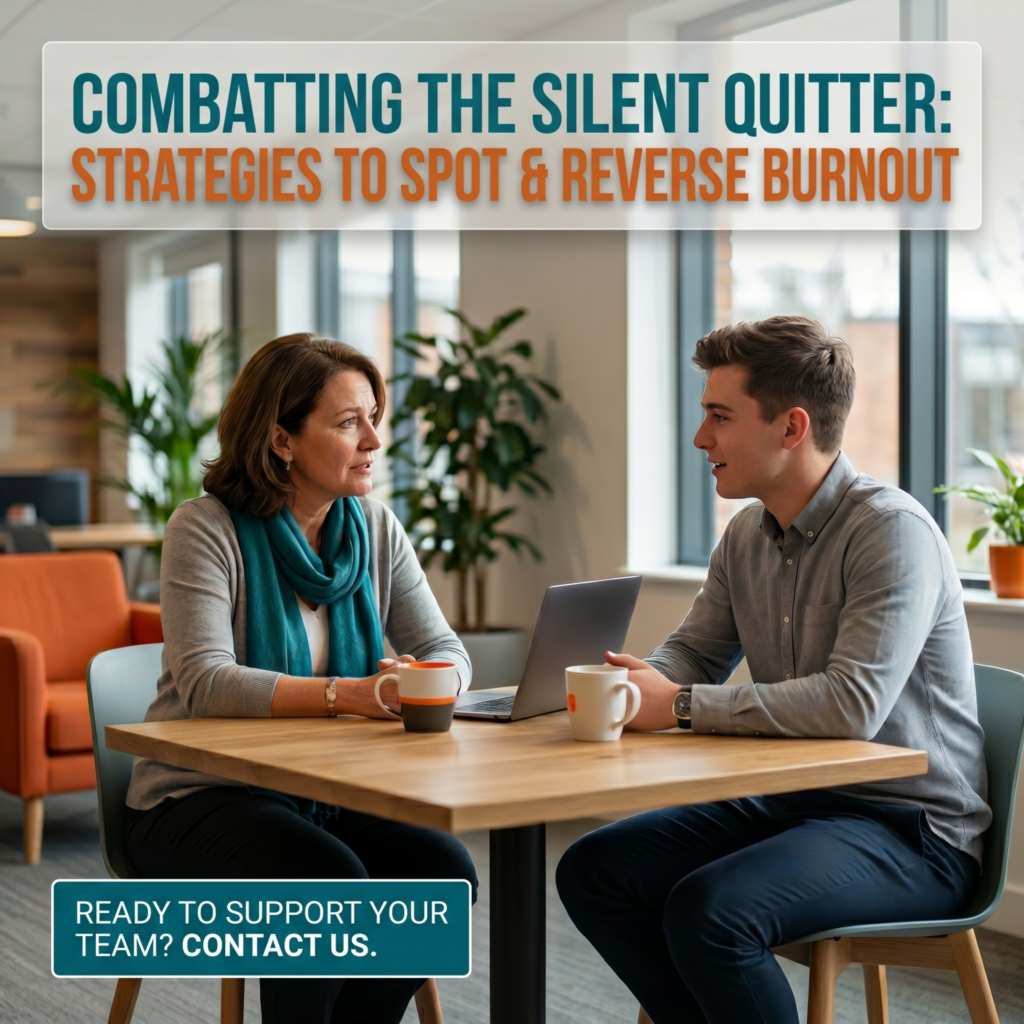
Burnout doesn't just hurt productivity—it costs you your best people. 🧘♂️ When your core team is stretched too thin, it’s time to be proactive. By utilizing stay interviews to understand their needs and bringing in contingent labor to shoulder the extra weight, you can protect your culture and your bottom line. Don't wait for the exit interview to make a change. Ready to relieve the pressure? Let’s get you the staffing solutions you need!
The phenomenon of “quiet quitting” is often misunderstood as a sudden drop in employee ambition or work ethic.
In reality, it is usually a symptom of deep-seated burnout, requiring leaders to proactively spot the warning signs and intervene before top talent is lost permanently.
Over the past few years, the term “quiet quitting” has dominated conversations surrounding workplace culture and employee retention. But the label itself is somewhat misleading. These employees haven’t actually quit, nor have they suddenly decided they no longer care about their careers. Instead, they have silently recalibrated their efforts, choosing to perform the absolute bare minimum required to keep their jobs. They stop volunteering for new projects, they log off the minute the clock strikes five, and they no longer offer innovative ideas during team meetings.
For business leaders and HR professionals, it is crucial to recognize that this behavior is rarely born out of laziness. Almost universally, it is a self-preservation tactic. It is a boundary erected by an employee who is experiencing profound burnout. If leadership fails to recognize this silent retreat, the organization doesn’t just lose out on discretionary effort; they eventually lose the employee altogether when the burnout evolves into a formal resignation.
Recognizing the Subtle Signs of the “Silent Quitter”
The danger of the silent quitter is that they are, by definition, quiet. They aren’t storming into HR to complain, and they aren’t dropping the ball on their core deliverables. Because they are still technically meeting expectations, the signs of their disengagement can easily slip under the radar. Managers must look for behavioral shifts.
- Withdrawal from Collaborative Culture: Pay attention to the employee who used to be the first to speak up in brainstorming sessions but now sits quietly in the back of the room. A sudden lack of voluntary participation is a glaring red flag.
- A Shift to Transactional Communication: When an employee is burning out, their communication often becomes entirely transactional. The casual check-ins and enthusiastic project updates are replaced by short, strictly business emails.
- Chronic Exhaustion and Cynicism: Listen to the tone of their responses. A burned-out employee may begin to express subtle cynicism about company goals or display a general sense of exhaustion that doesn’t resolve after a weekend away.
The Root Causes of Burnout in the Modern Workplace
To reverse this trend, you first have to understand what is driving it. While personal factors can contribute, workplace structure is usually the primary culprit.
- The “Reward” for Hard Work is More Work: In many organizations, the most capable employees are consistently handed the heaviest burdens. If top performers are constantly given the overflow from underperforming colleagues without a corresponding increase in compensation or title, they will eventually stop performing at the top level.
- Chronic Understaffing: When a business operates with a lean headcount for too long, employees are forced to do the jobs of two or three people. This might work during a short-term crisis, but it is entirely unsustainable as a long-term operational model.
- Lack of Clear Boundaries: In a hyper-connected world, the line between work and home is easily blurred. Employees who feel obligated to answer emails at 9:00 PM or check Slack on Sunday mornings never actually unplug, leading directly to cognitive exhaustion.
Proactive Strategies to Reverse the Burnout Cycle
Re-engaging a silent quitter requires intentional leadership and a willingness to change the operational environment.
- Conduct “Stay Interviews”: Don’t wait for an exit interview to find out why an employee is unhappy. Conduct regular, informal one-on-one meetings specifically focused on their workload, their career goals, and what the company can do to better support them.
- Enforce the Right to Disconnect: Leadership must model healthy boundaries. If the CEO is sending emails at midnight, the staff will feel pressured to reply. Establish clear policies regarding after-hours communication and actively encourage employees to take true, disconnected Paid Time Off (PTO).
- Realign Expectations and Recognition: Audit the workloads of your most disengaged team members. Ensure that their responsibilities align with their job descriptions and that their compensation accurately reflects their output. Sometimes, a heartfelt acknowledgment of their hard work and a slight adjustment in duties can reignite their passion for the role.
Leveraging Flexible Staffing to Relieve the Pressure
All the wellness programs in the world won’t fix burnout if the root cause is simply too much work and not enough people. When your core team is stretched beyond their capacity, the most effective strategy is to bring in reinforcements.
By utilizing temporary or contract workers, you can immediately alleviate the pressure on your permanent staff. Contingent labor can take over repetitive, time-consuming tasks or handle the overflow during busy seasons, allowing your experienced employees to focus on high-level strategy without drowning in the details. Investing in strategic staffing isn’t just an operational expense; it is a direct investment in the mental health and retention of your most valuable employees.
Disclaimer: The workplace wellness and HR strategies discussed in this article are intended for general informational purposes. Businesses should consult with HR professionals or legal counsel to ensure their policies align with local labor laws and best practices.
Ready to support your team and eliminate burnout?
If your core employees are overwhelmed and exhibiting signs of burnout, Transnational Staffing can provide the relief they need. From temporary project support to strategic direct hires, we have the talent solutions to balance your workloads. Contact us today at (734) 284-0785 or visit us online at transnationalstaffing.com to discuss how flexible staffing can transform your workplace culture.