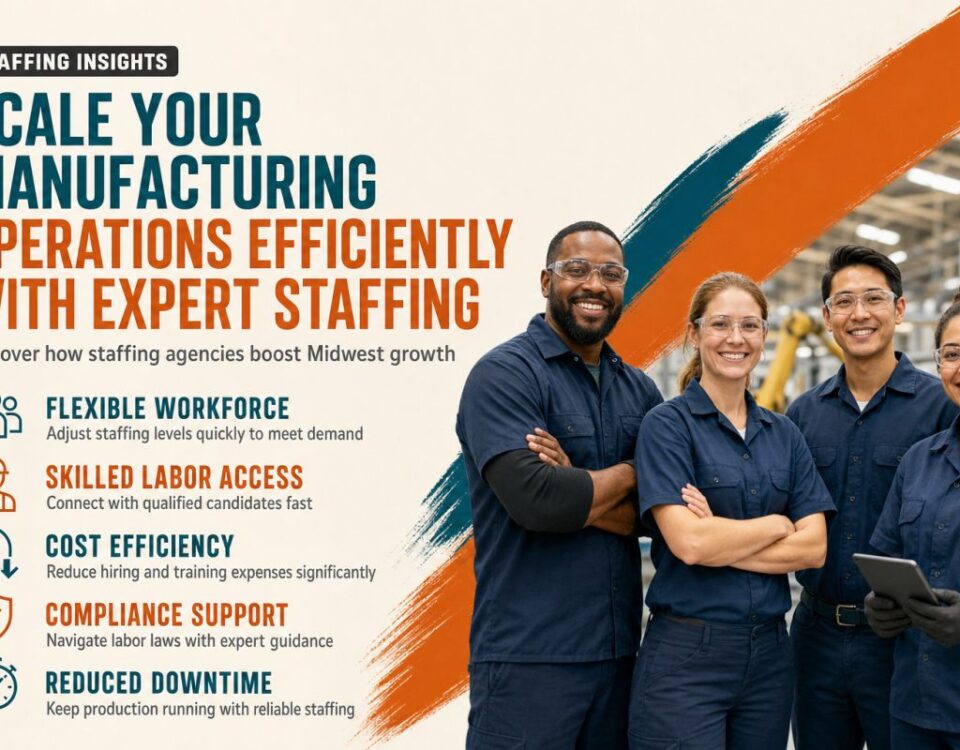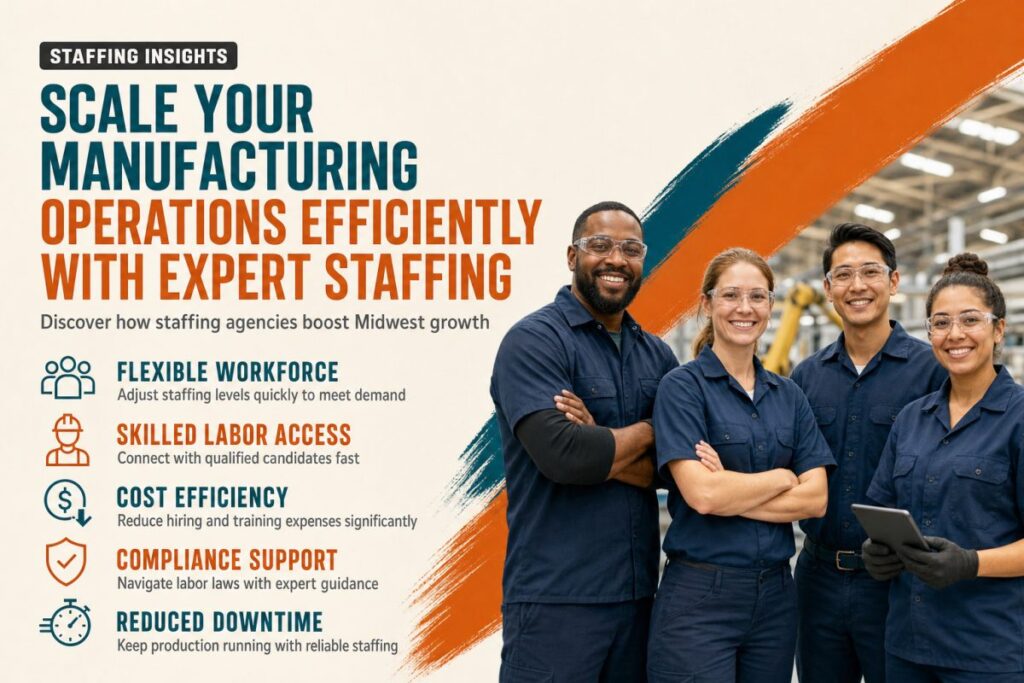
How Midwest Manufacturers Can Leverage Staffing Agencies to Scale Efficiently
October 10, 2026
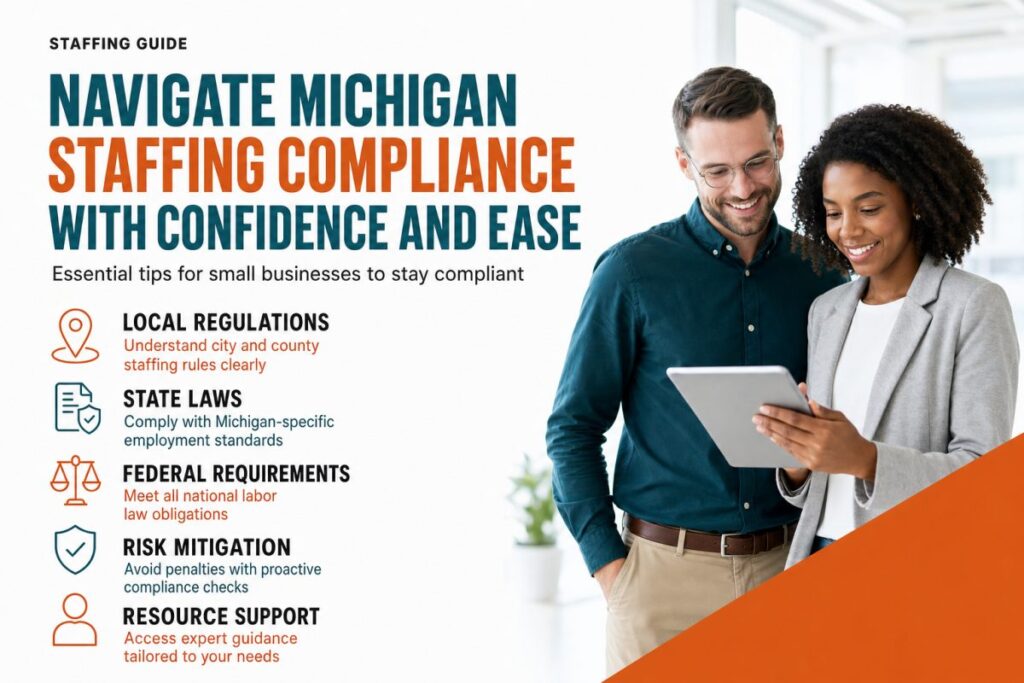
For small to mid-sized businesses in Michigan, staffing compliance is a critical yet often complex challenge. Understanding and adhering to local, state, and federal staffing regulations is essential to avoid costly penalties, legal disputes, and operational disruptions. This guide provides practical insights and actionable steps to help Michigan employers navigate staffing compliance with confidence, ensuring a workforce strategy that is both effective and fully compliant.
Understanding the Staffing Compliance Landscape in Michigan
Staffing compliance in Michigan involves adhering to a variety of laws and regulations that govern hiring practices, workplace safety, employee classification, and wage standards. Small businesses must stay informed about these rules to protect their company and employees.
Key Employment Laws Affecting Michigan Businesses
Michigan businesses must comply with federal laws such as the Fair Labor Standards Act (FLSA), the Occupational Safety and Health Act (OSHA), and the Equal Employment Opportunity Commission (EEOC) regulations. In addition, Michigan-specific laws like the Michigan Paid Medical Leave Act and the Elliott-Larsen Civil Rights Act impose further requirements.
- Wage and Hour Laws: Ensure compliance with minimum wage, overtime pay, and record-keeping requirements.
- Employee Classification: Correctly classify workers as employees or independent contractors to avoid penalties.
- Workplace Safety: Follow OSHA standards to maintain a safe working environment.
- Anti-Discrimination: Adhere to state and federal anti-discrimination laws during hiring and employment.
Why Compliance Matters for Small Businesses
Non-compliance can lead to fines, lawsuits, and damage to your business reputation. More importantly, it can affect employee morale and retention. A compliant workplace fosters trust and stability, helping small businesses grow sustainably.
Practical Steps to Maintain Staffing Compliance in Michigan
Implementing a structured approach to staffing compliance can simplify the process and reduce risks. Here are essential steps Michigan employers should follow.
1. Develop Clear Hiring Policies
Start with written policies that outline your hiring process, job descriptions, and equal opportunity commitments. Transparent policies ensure consistency and legal protection.
2. Verify Work Eligibility
Use the federal I-9 form to verify every employee’s eligibility to work in the United States. Stay updated on E-Verify system requirements as applicable.
3. Maintain Accurate Records
Keep detailed records of employee hours, wages, benefits, and any disciplinary actions. Accurate documentation is crucial during audits or legal inquiries.
4. Train Supervisors and HR Staff
Ensure that those involved in hiring and managing employees understand compliance requirements. Regular training on topics like anti-discrimination and wage laws helps prevent violations.
5. Conduct Regular Compliance Audits
Periodically review your staffing procedures and documentation to identify and correct potential compliance gaps before they escalate.
Leveraging Staffing Partners to Enhance Compliance
Small businesses often benefit from partnering with staffing agencies to manage compliance complexities effectively. Staffing partners bring expertise, resources, and up-to-date knowledge to support your workforce needs.
How Staffing Agencies Support Compliance
- Expertise in Local and Federal Laws: Agencies specialize in understanding evolving regulations, reducing your risk of non-compliance.
- Screening and Documentation: They handle background checks, eligibility verification, and proper record-keeping.
- Flexible Staffing Solutions: Agencies provide part-time, full-time, contingent, and long-term staffing options tailored to your business demands.
Choosing the Right Staffing Partner in Michigan
Look for agencies with a proven track record in your industry and region. Transparency, clear communication, and a people-first approach are signs of a reliable partner.
Transnational Staffing, for example, emphasizes trust, compliance, and long-term success for Michigan businesses. Their range of services, including Manufacturing Staffing, Office or Clerical Staffing, and Contingent Staffing, can help you stay compliant while meeting your workforce needs efficiently.
Common Compliance Challenges and How to Overcome Them
Even with the best intentions, small businesses face hurdles in maintaining staffing compliance. Awareness and proactive strategies are key.
Challenge 1: Misclassifying Employees
Misclassification can lead to unpaid taxes and penalties. Clearly define roles and consult legal or staffing experts to correctly categorize workers.
Challenge 2: Keeping Up with Changing Regulations
Staffing laws evolve frequently. Subscribe to regulatory updates, attend workshops, or partner with staffing agencies to stay informed.
Challenge 3: Managing Documentation
Inconsistent or incomplete record-keeping can trigger compliance issues. Use digital tools or staffing partners to maintain organized records.
Challenge 4: Training Gaps
Regular compliance training is often overlooked. Schedule consistent sessions and refreshers to keep your team aware of legal responsibilities.
Conclusion: Build Staffing Compliance Confidence Today
Staffing compliance in Michigan doesn’t have to be overwhelming. By understanding your legal obligations, implementing clear policies, maintaining accurate records, and leveraging expert staffing partners, you can confidently build a compliant, productive workforce. For small to mid-sized businesses in manufacturing, logistics, office, or industrial sectors, partnering with a trusted agency like Transnational Staffing ensures you stay ahead of compliance challenges.
Ready to strengthen your staffing compliance strategy? Call Transnational Staffing today at (734) 284-0785 or visit transnationalstaffing.com to learn how we can help you navigate staffing regulations with confidence.