The Human-in-the-Loop: Using AI in Recruiting Without Losing the Personal Touch
June 7, 2026
Green Collar Growth: Why Michigan is Leading the Energy Sector Boom
June 21, 2026
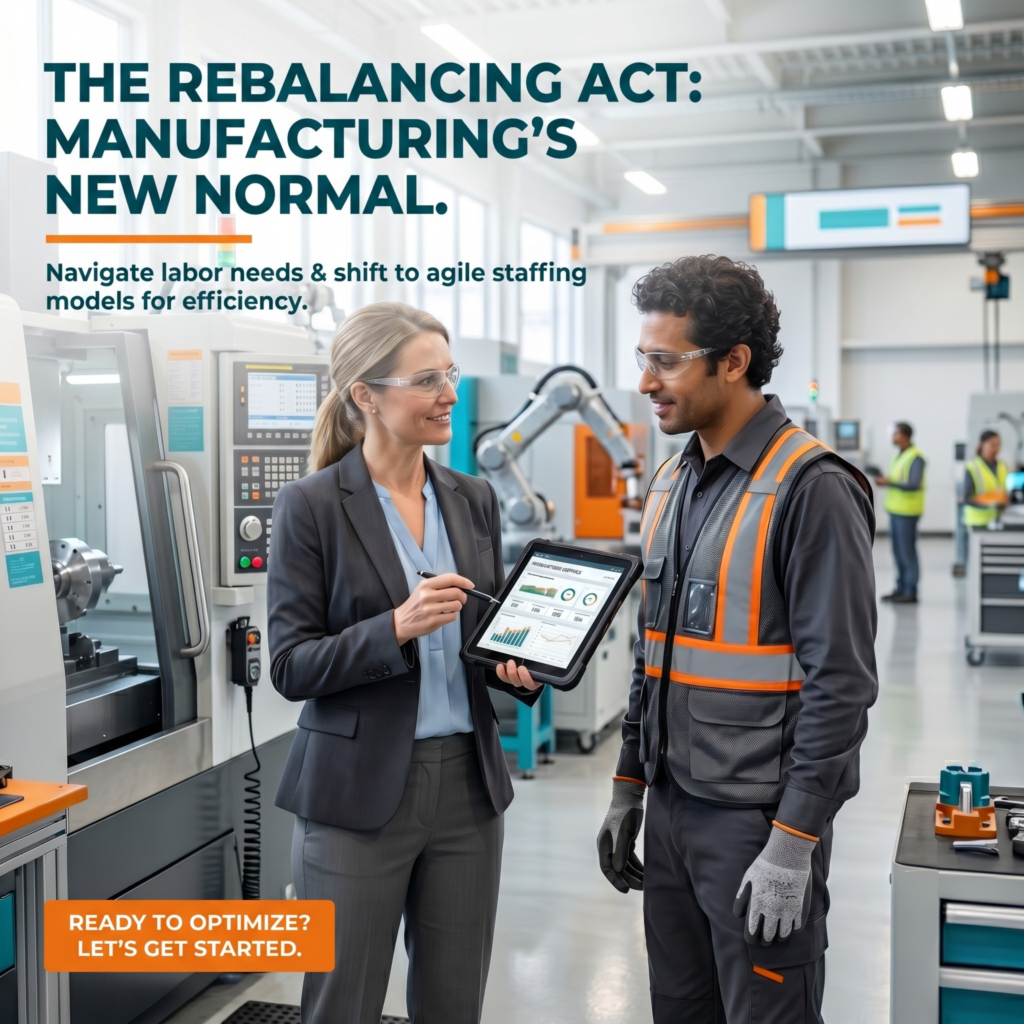
The manufacturing sector is experiencing a massive shift as supply chains normalize and economic demands fluctuate.
To stay competitive, plant managers and operational leaders must recalibrate their workforce strategies, balancing the need for skilled labor with agile operational costs.
In the wake of supply chain disruptions and volatile consumer demand, the manufacturing industry is entering a period of normalization. However, this “rebalancing” brings its own set of challenges. Production quotas are stabilizing, but the cost of skilled labor remains high. For Michigan manufacturers—the backbone of the region’s economy—the goal is no longer just finding enough hands for the assembly line, but finding the right hands to maximize efficiency and minimize overhead.
Moving From Headcount to Skill Sets
During peak production periods, the focus is often on pure headcount. In a shifting economy, profitability relies on versatility.
- Focus on Cross-Training: The most resilient manufacturing floors are staffed by employees who can seamlessly transition between different machines or assembly stations based on daily needs.
- Prioritize Problem-Solvers: Modern manufacturing relies heavily on automated systems and robotics. You need workers who don’t just follow repetitive manual steps, but who possess the aptitude to troubleshoot technical issues on the floor.
- Assess Shift Efficiencies: Analyze your peak operating hours and consolidate shifts where possible, relying on flexible talent to fill in the gaps rather than carrying full-time workers during slower periods.
The Role of Agile Staffing Models
Carrying excess permanent labor during a market recalibration can severely impact your bottom line. Integrating flexible staffing models protects your margins while ensuring you can scale up instantly when large orders come in.
- Contingent Labor: Utilize temporary staff to handle seasonal spikes or specific short-term production runs, allowing your core permanent team to remain stable without burnout.
- Contract-to-Hire: Testing a worker’s reliability, safety adherence, and cultural fit on the floor before extending a permanent offer significantly reduces the financial risk of a bad hire.
Prioritizing Safety and Compliance
When labor needs fluctuate and new faces enter the facility, safety protocols can sometimes slip through the cracks. Whether you are onboarding temporary workers or restructuring your current shifts, maintaining strict OSHA compliance and safety standards is non-negotiable. Partnering with a staffing agency that handles rigorous safety orientations and background checks ensures that every worker who steps onto your floor is ready to work safely from day one.
Disclaimer: The industry trends discussed are for informational purposes and should not be considered formal financial or operational advice. Always align staffing decisions with your specific production and HR guidelines.
Ready to optimize your manufacturing workforce?
Whether you need reliable contingent labor for a high-volume run or skilled technicians for a direct hire, Transnational Staffing understands the unique demands of Michigan’s manufacturing sector. Let us help you balance your workforce. Contact us today at (734) 284-0785 or visit us online to get a customized staffing quote.