Beyond the Paycheck: How to Design an Employee Value Proposition That Actually Works
May 3, 2026
Hire for Adaptability: The #1 Soft Skill Employers Are Looking for in 2026
May 17, 2026
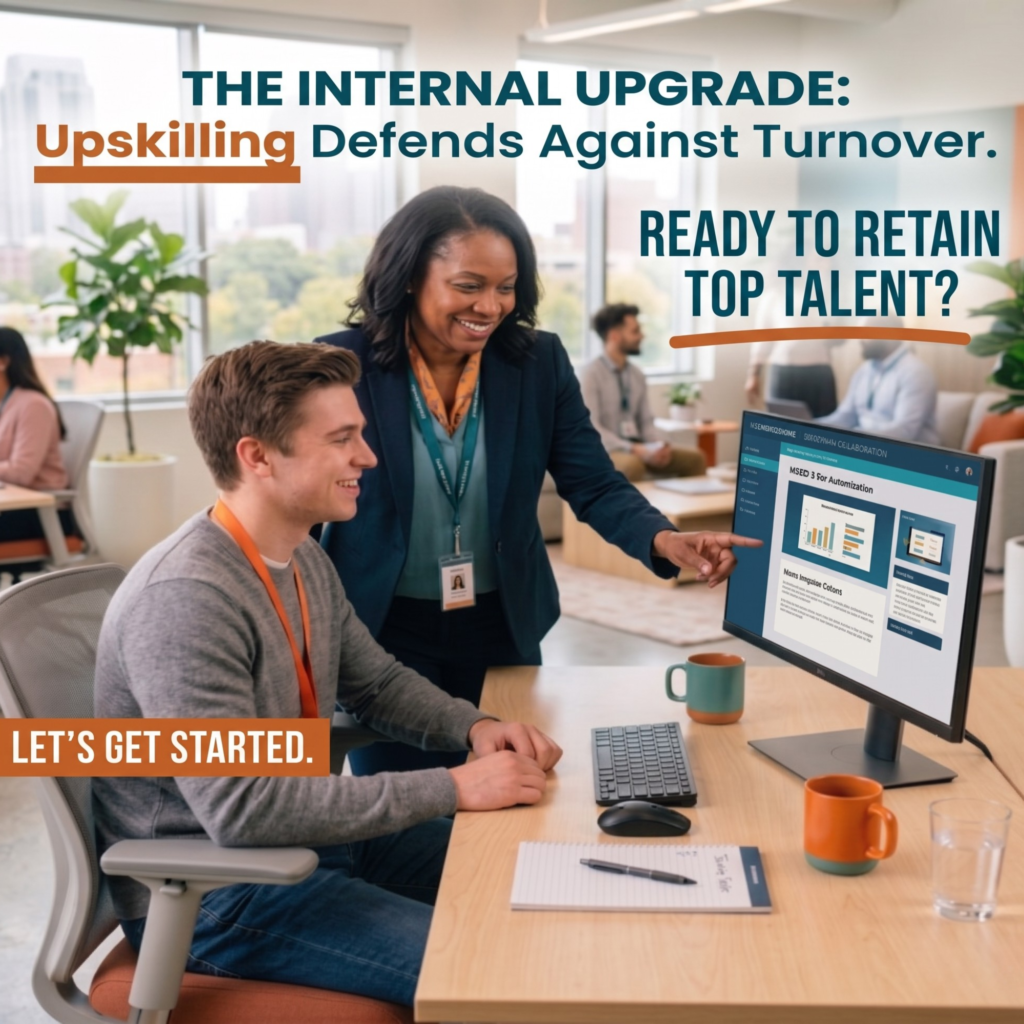
In a competitive labor market where replacing an employee can cost up to twice their annual salary, retention is no longer just an HR metric—it is a critical business strategy.
Instead of constantly looking outward to fill talent gaps, the most resilient companies are looking inward and investing in upskilling their current workforce to defend against turnover.
The cycle of high turnover is exhausting and expensive. Every time a seasoned employee leaves, they take valuable institutional knowledge with them, leaving the remaining team stretched thin while leadership scrambles to recruit, hire, and train a replacement. In many cases, top performers leave not because they dislike the company, but because they feel their career has stagnated. When the learning stops, the job hunting begins.
The Link Between Learning and Loyalty
When you invest in upskilling, you send a clear and powerful message to your team: we see your potential, and we want you to grow with us.
- Breaks the Stagnation Cycle: Employees who are actively learning new software, leadership skills, or advanced technical procedures are more engaged and significantly less likely to shop their resume around.
- Fills Critical Talent Gaps: Rather than engaging in a costly bidding war for a rare external candidate, you can train a reliable, culturally aligned internal employee to step into that specialized role.
- Boosts Overall Morale: A culture of continuous learning fosters a dynamic, forward-thinking environment where employees feel valued beyond their immediate daily output.
Implementing a Practical Upskilling Strategy
Upskilling doesn’t have to mean sending employees back to college for a four-year degree. It can be targeted, efficient, and immediately applicable to your operational needs.
- Micro-Learning and Certifications: Utilize online courses or industry-specific certifications that employees can complete during work hours to master a new tool, compliance standard, or management technique.
- Cross-Training: Train employees on tasks outside their standard job description. This not only builds their skill set and confidence but also creates vital operational redundancy for your business.
- Mentorship Programs: Pair entry-level workers with seasoned veterans to transfer institutional knowledge and develop the next generation of leadership from within your own ranks.
Strategic Backfilling During Training
One of the biggest hurdles to upskilling is time. Managers often ask, “How can my employees learn new skills when we are already barely hitting our production quotas?” This is where a strategic staffing partnership becomes invaluable. By bringing in reliable contingent labor to handle baseline operational tasks, you can free up your core team to engage in high-value training without sacrificing daily productivity.
Disclaimer: The retention and training strategies discussed are intended for informational purposes and should be tailored to fit your organization’s specific human resources capabilities and industry requirements.
Ready to invest in your team’s future?
Whether you need contingent staff to cover operations during a training sprint or want to hire adaptable candidates who are ready to grow, Transnational Staffing has the solutions. Let us help you build a workforce that stays. Contact us today at (734) 284-0785 or visit us online to discuss your long-term staffing strategy.