The Internal Upgrade: Why Upskilling is Your Best Defense Against Turnover
May 10, 2026
Skills Over Pedigree: Why the Resume is Getting a Rewrite in 2026
May 24, 2026
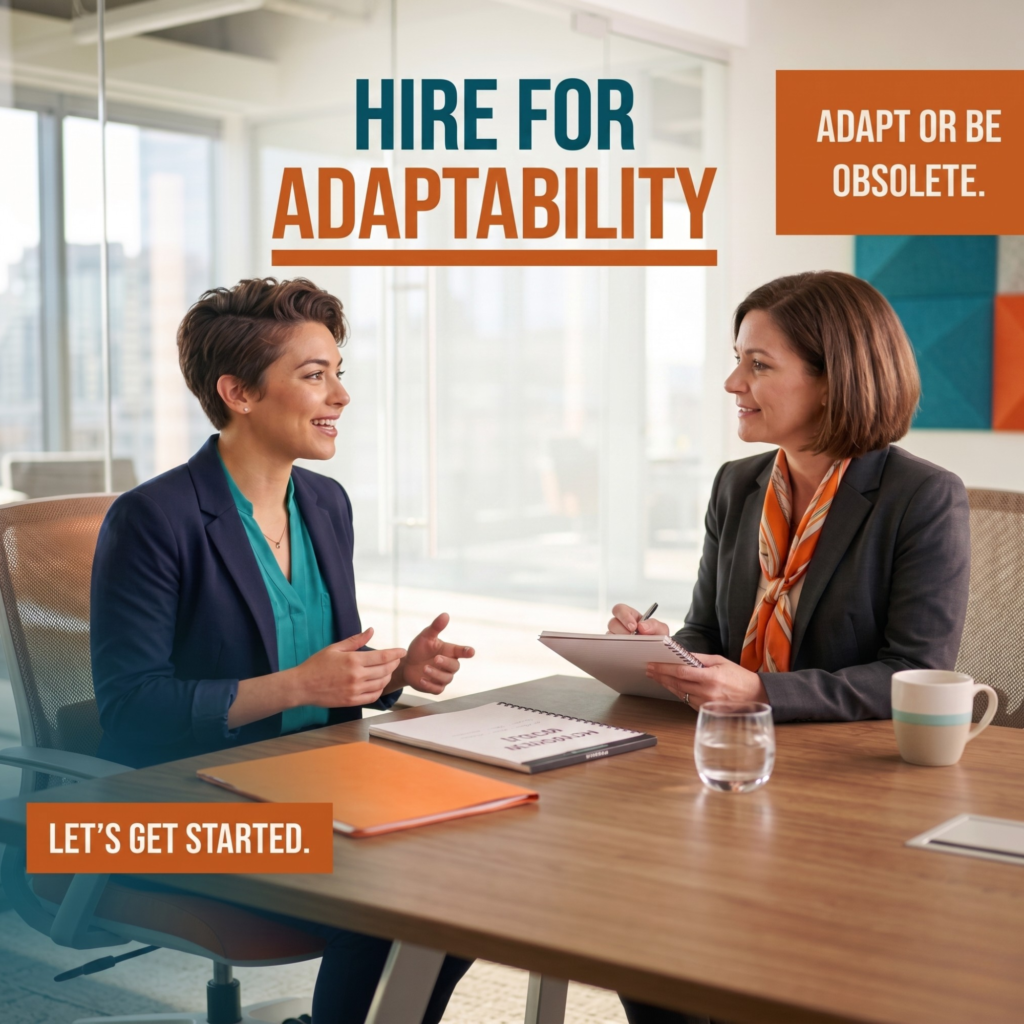
The rapid pace of technological advancement and shifting economic demands have fundamentally changed what makes an employee successful.
In 2026, the most valuable trait a new hire can possess isn’t a specific technical certification or a flawless pedigree—it is adaptability.
In a business landscape where generative AI tools are constantly updating, supply chains are shifting, and operational models are pivoting overnight, hard skills have a shorter shelf life than ever before. What an employee learned a few years ago may already be obsolete. Because of this, hiring managers are changing their focus. They are no longer just looking for candidates who know how to do the job today; they are actively seeking candidates who can figure out how to do the job tomorrow.
The Difference Between Competence and “Learnability”
Competence means a candidate can execute a specific set of tasks based on past experience. “Learnability”—a core component of adaptability—means a candidate has the desire and capability to quickly grow their skill set to meet new challenges.
- Resilience in the Face of Change: Adaptable employees do not panic when a project changes scope at the last minute. They assess the new parameters and pivot their strategy.
- Proactive Problem Solving: Instead of waiting for a manual to be written, an adaptable worker will test solutions, research new software, and find a way forward.
- Cultural Add: Flexible team members elevate the entire office culture. Their willingness to embrace change reduces organizational friction and inspires peers to be more open-minded.
How to Spot Adaptability in an Interview
Because adaptability is a soft skill, it cannot be easily verified by glancing at a resume. Employers must strategically design their interview questions to reveal a candidate’s true flexibility.
- Ask About the Pivot: Use behavioral questions like, “Tell me about a time when you had to abandon a project midway through and start over with new instructions. How did you handle it?”
- Look for Continuous Learning: Ask candidates what they are currently learning or how they stay updated in their field. Self-taught skills, bootcamps, or a habit of reading industry news are strong indicators of an adaptable mindset.
- Test Ambiguity: Present a hypothetical scenario with incomplete information and ask how they would proceed. Adaptable candidates will ask clarifying questions and outline a logical framework rather than getting stuck on the missing details.
A Note for Job Seekers
If you are entering the 2026 job market, your ability to demonstrate flexibility is your greatest asset. During interviews, make sure to highlight moments where you covered for a colleague in a different department, learned a new CRM system on the fly, or successfully navigated a company restructuring. Employers want to know that you are a safe investment, capable of growing alongside their business.
The Ultimate Test: Contract-to-Hire
The most effective way to guarantee a candidate is adaptable is to see them in action. Contract-to-hire staffing models allow employers to evaluate a worker’s on-the-job flexibility, problem-solving skills, and cultural fit before extending a permanent offer, significantly reducing the risk of a bad hire.
Disclaimer: The hiring trends and interview strategies discussed are intended for informational purposes and should be adapted to fit your organization’s specific human resources policies and operational goals.
Ready to build a future-proof workforce?
Whether you are looking for highly adaptable direct-hire professionals or flexible contingent staff, Transnational Staffing can connect you with the talent you need to navigate whatever comes next. Let us help you hire for the future. Contact us today at (734) 284-0785 or visit us online to start building your resilient team.