Green Collar Growth: Why Michigan is Leading the Energy Sector Boom
June 21, 2026
The 2026 “Growth Pause”: How to Hire Smart When the Market Stabilizes
July 5, 2026
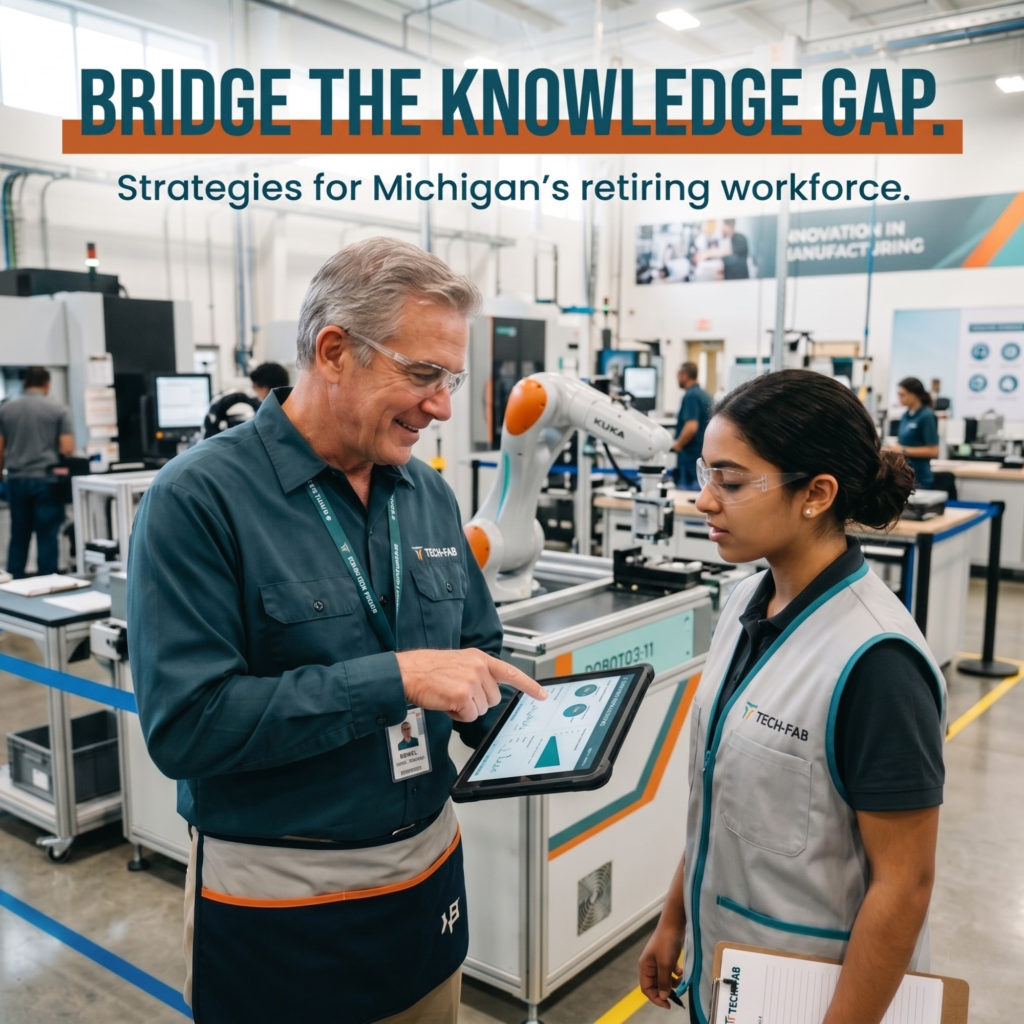
A significant portion of Michigan’s skilled workforce is approaching retirement age, bringing a wave of demographic shifts to local industries.
To prevent a critical loss of expertise, employers must proactively implement strategies to transfer institutional knowledge before their most experienced team members clock out for the last time.
Across Michigan, from manufacturing floors to corporate offices, a massive demographic transition is underway. The baby boomer generation—which holds decades of specialized skills, historical context, and technical problem-solving abilities—is steadily retiring. When these seasoned veterans leave, they don’t just take their personal belongings; they take “institutional knowledge,” the undocumented, deeply ingrained understanding of how your business actually runs.
Failing to capture this expertise before it walks out the door can lead to severe operational disruptions, decreased productivity, and costly errors.
Identify Your Most Vulnerable Knowledge Gaps
Not all knowledge is created equal. The first step in bridging the gap is identifying which roles carry the highest risk if vacated tomorrow.
- Conduct a Risk Assessment: Map out your upcoming retirements over the next one to three years and pinpoint the roles that rely heavily on undocumented processes or niche technical skills.
- Open the Dialogue: Have transparent conversations with your senior staff about their retirement timelines. Make it clear that this isn’t about pushing them out, but about honoring their legacy by preserving their expertise.
Implement Cross-Generational Mentorship
The most effective way to transfer complex knowledge is through human connection. Pairing seasoned professionals with younger, adaptable employees creates a powerful dynamic that benefits both generations.
- Shadowing Programs: Assign junior staff to shadow your most experienced workers. Encourage them to ask the “why” behind the “how.”
- Reverse Mentoring: Older employees can share their deep industry knowledge, while younger employees can introduce new efficiencies using modern software or AI tools, fostering a collaborative environment rather than a competitive one.
Document the “Undocumentable”
Many veterans perform complex tasks purely on muscle memory and intuition. You must translate that intuition into standard operating procedures (SOPs).
- Record Processes: Have retiring employees record themselves performing critical tasks, or utilize screen-recording software for digital workflows.
- Build a Knowledge Base: Create a centralized, easily accessible digital library of training manuals, troubleshooting guides, and essential contacts that your team relies on.
Leverage Phased Retirements and Fractional Work
Retirement doesn’t have to be a hard stop. Many older workers welcome the idea of stepping back gradually rather than leaving the workforce entirely overnight.
- Flexible Scheduling: Offer part-time or project-based roles to employees approaching retirement. This gives them the flexibility they desire while keeping their expertise available to your core team.
- Alumni Consulting: Bring recently retired top-performers back on a fractional basis for high-stakes projects or specialized training sessions.
Protect Your Legacy with Strategic Staffing
Navigating a generational shift in your workforce is a complex undertaking, but you don’t have to do it alone. Partnering with a skilled staffing agency allows you to strategically backfill roles, source adaptable candidates ready to learn, and manage fractional contracts for your transitioning retirees.
Disclaimer: The workforce strategies discussed are intended for informational purposes and should be tailored to align with your organization’s specific human resources policies and operational goals.
Ready to secure your business’s future?
Don’t wait until your top talent turns in their two-week notice to start planning. Transnational Staffing can help you build a proactive succession plan and source the next generation of industry leaders. Contact us today at (734) 284-0785 or visit us online to discuss your long-term staffing strategy.