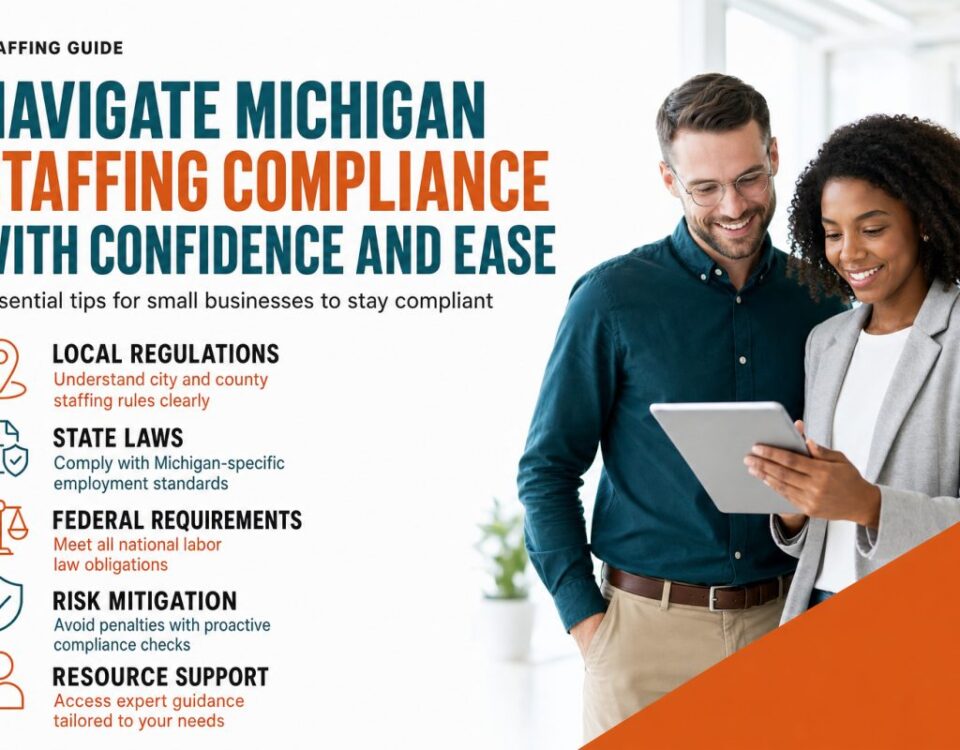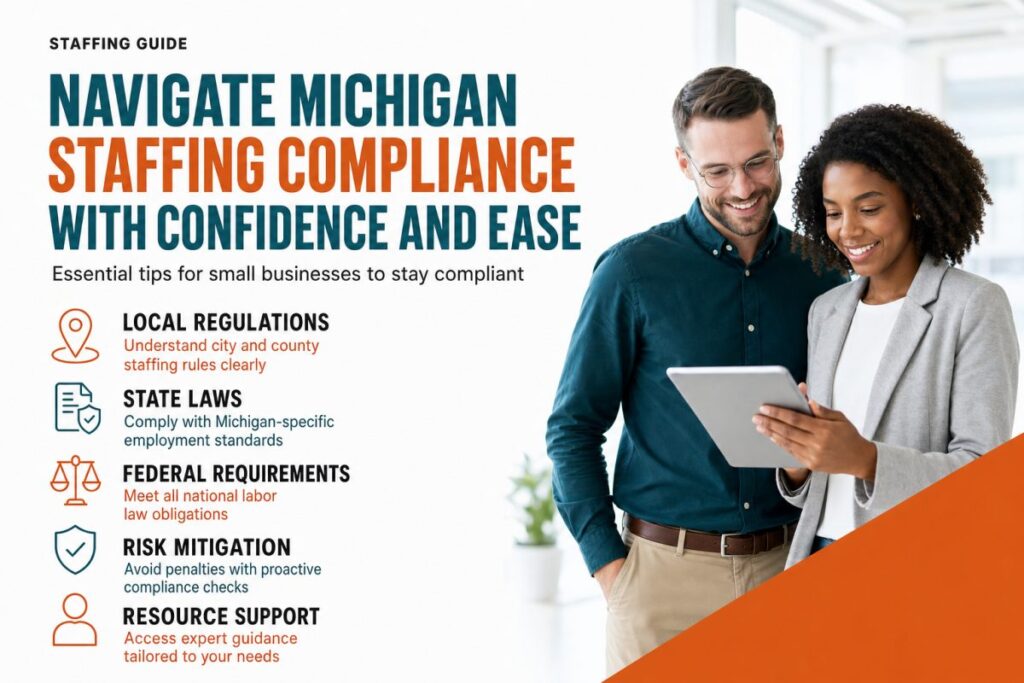
How Small Businesses in Michigan Can Navigate Staffing Compliance with Confidence
October 13, 2026
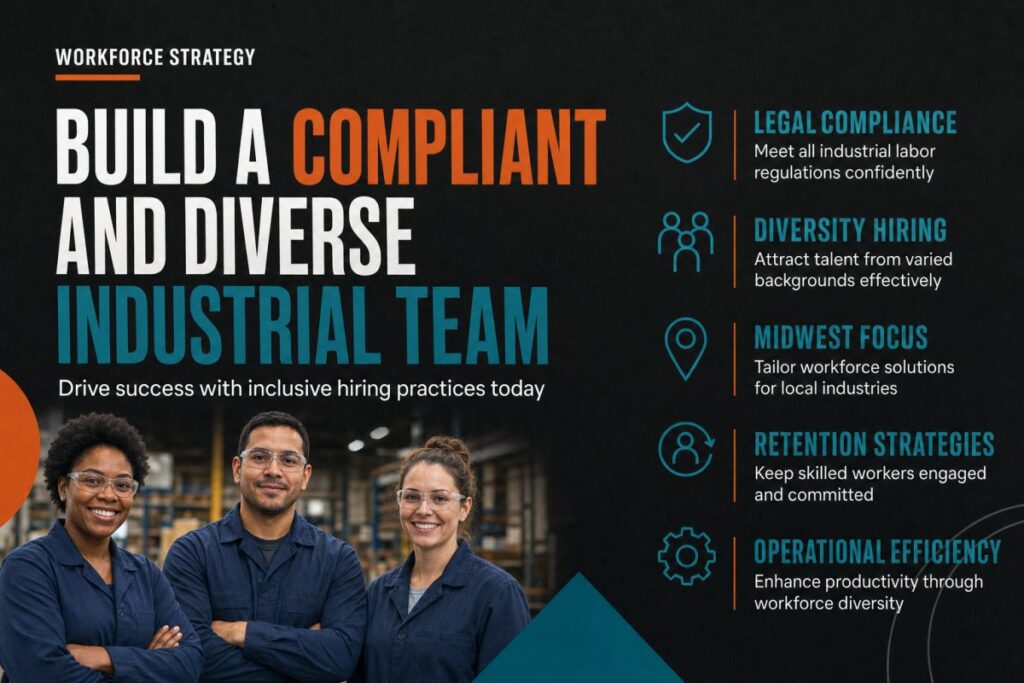
Creating a compliant diverse workforce industrial employers can be proud of is more than a legal obligation—it’s a strategic advantage. For manufacturers, warehouses, and logistics companies in Michigan and the Midwest, building teams that meet regulatory standards while embracing diversity boosts productivity, morale, and long-term success. In this article, we explore practical steps to maintain compliance with labor laws and foster an inclusive workforce in industrial environments.
Understanding Compliance in Industrial Staffing
Compliance in industrial staffing means adhering to a complex web of federal, state, and local regulations designed to protect workers and employers. These include laws on workplace safety, wage and hour rules, anti-discrimination policies, and proper classification of workers. For small to mid-sized businesses, navigating this landscape can be challenging but is essential to avoid costly penalties and reputational damage.
Key Compliance Areas for Industrial Employers
- Occupational Safety and Health Administration (OSHA) Regulations: Ensuring safe working conditions to prevent accidents and injuries.
- Fair Labor Standards Act (FLSA): Compliance with minimum wage, overtime pay, and proper employee classification.
- Equal Employment Opportunity (EEO) Laws: Preventing discrimination based on race, gender, age, disability, or other protected characteristics.
- Americans with Disabilities Act (ADA): Providing reasonable accommodations for qualified employees with disabilities.
- Immigration and Employment Eligibility: Verifying work authorization and maintaining proper documentation.
Employers must implement clear policies, conduct regular training, and maintain accurate records to stay compliant. Partnering with a staffing agency experienced in compliance can also ease this burden, ensuring all hires meet legal standards.
Why Diversity Matters in Industrial and Warehouse Staffing
Diversity goes beyond meeting quotas or ticking boxes—it brings tangible benefits to industrial operations. A diverse workforce introduces varied perspectives, problem-solving approaches, and communication styles that can improve efficiency and innovation on the shop floor and in logistics management.
Benefits of a Diverse Industrial Workforce
- Enhanced Team Collaboration: Different backgrounds foster creative solutions and stronger teamwork.
- Improved Recruitment and Retention: Inclusive workplaces attract a wider talent pool and reduce turnover.
- Better Customer Understanding: Diverse teams can better relate to a varied customer base, enhancing service quality.
- Positive Workplace Culture: Inclusion supports employee satisfaction and engagement, reducing absenteeism.
In industrial settings, embracing diversity means recruiting candidates from a range of ethnicities, genders, ages, and skill levels, including skilled tradespeople and entry-level workers. It also means fostering an environment where all employees feel respected and valued.
Best Practices for Building a Compliant and Diverse Workforce
Successfully balancing compliance and diversity requires intentional strategies tailored to industrial and warehouse employers. Below are key steps to achieve this goal.
1. Develop Clear, Inclusive Hiring Policies
Craft hiring policies that comply with all legal requirements and explicitly promote diversity and inclusion. Use job descriptions free of biased language and focus on essential skills and qualifications. Ensure your recruitment process evaluates candidates fairly and consistently.
2. Train Hiring Managers and Supervisors
Provide training on compliance topics such as anti-discrimination laws and ADA accommodations. Also include diversity awareness to help managers recognize unconscious biases and create supportive environments. Regular refreshers reinforce these principles.
3. Partner with Trusted Staffing Agencies
Working with agencies like Transnational Staffing ensures your hires meet compliance standards and support diversity goals. Specialized staffing partners understand the nuances of industrial labor laws and can source candidates from diverse backgrounds who align with your culture.
4. Implement Ongoing Workforce Education
Compliance and diversity are not one-time efforts. Continuous training on workplace safety, harassment prevention, and cultural competency helps maintain a positive and lawful work environment. Encourage open dialogue and feedback from employees to identify areas for improvement.
5. Monitor and Measure Progress
Track key metrics such as workforce composition, turnover rates, and compliance audits. Use this data to identify trends, gaps, and opportunities. Transparent reporting to leadership and staff builds accountability and supports continuous improvement.
Creating a Culture That Supports Diversity and Compliance
Beyond policies and procedures, fostering a culture that values diversity and compliance is crucial. Leadership commitment, visible support for inclusion initiatives, and recognition of diverse contributions encourage employee buy-in and engagement.
Encourage Employee Resource Groups and Mentoring
Support groups where employees from diverse backgrounds can connect and share experiences. Mentoring programs help new hires integrate and grow professionally, reinforcing an inclusive atmosphere.
Address Challenges Proactively
Industrial workplaces may face challenges such as language barriers or resistance to change. Address these through tailored communication, translation services, and team-building activities that promote understanding and respect.
Celebrate Diversity Milestones and Achievements
Recognize diversity milestones and celebrate successes publicly. This reinforces the importance of inclusion and motivates continued efforts.
Conclusion
Building a compliant diverse workforce industrial employers can rely on is a strategic investment that enhances operational efficiency, workforce stability, and company reputation. By understanding compliance requirements, embracing diversity’s benefits, and implementing thoughtful best practices, industrial businesses in Michigan and the Midwest can create work environments where everyone thrives.
Transnational Staffing is here to support your journey. We specialize in providing compliant, diverse staffing solutions tailored to your unique industrial needs. Ready to strengthen your workforce with trusted partners who prioritize people and compliance? Call us today at (734) 284-0785 or visit https://transnationalstaffing.com to learn more.
Explore additional resources on workforce education and staffing strategies in our blog at Transnational Staffing Blog.