Hire for Adaptability: The #1 Soft Skill Employers Are Looking for in 2026
May 17, 2026
Decoding the Temporary Shift: Why Contract Work is the Best Way to Test-Drive a Career
May 31, 2026
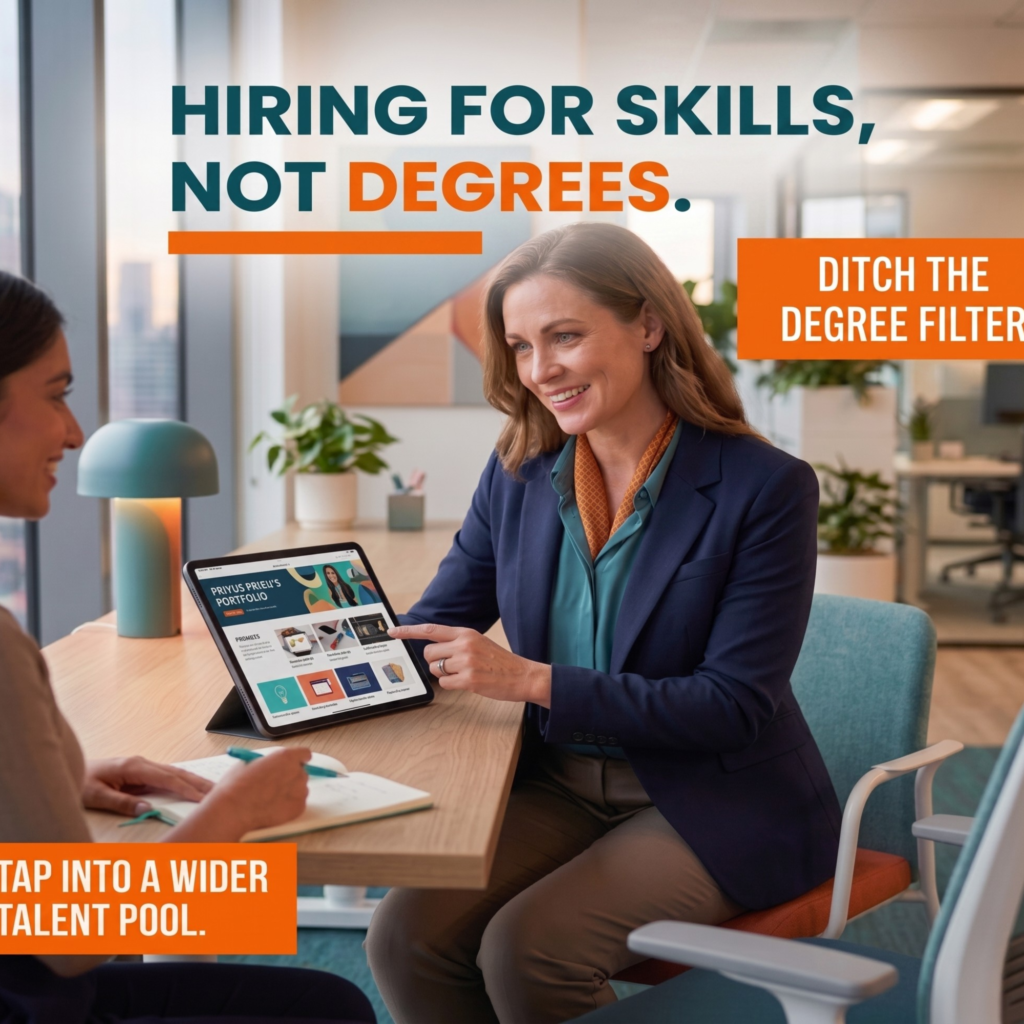
For decades, a four-year degree was the undisputed golden ticket to securing top-tier corporate talent.
However, as we navigate the complexities of the 2026 labor market, forward-thinking employers are tearing up the traditional hiring playbook and prioritizing proven skills over academic pedigree.
In the past, filtering candidates by college degrees was a quick way to narrow down a massive stack of resumes. But this practice inadvertently created a “paper ceiling,” artificially limiting the talent pool and excluding highly capable individuals who gained their expertise through non-traditional routes. Today, the rapid pace of technological change and shifting economic demands mean that what a candidate learned five years ago in a classroom matters far less than their ability to adapt and solve problems right now.
The Benefits of a Skills-First Approach
Dropping rigid educational requirements in favor of a skills-based hiring strategy isn’t just about being progressive; it is a serious competitive advantage.
- Expanding the Talent Pool: By removing the degree filter, you immediately gain access to a massive group of self-taught experts, military veterans transitioning to civilian roles, and individuals who upskilled through specialized bootcamps.
- Better Retention Rates: Data consistently shows that employees hired for their specific skill sets and cultural add, rather than their academic background, tend to stay in their roles longer and report higher job satisfaction.
- Increased Diversity: A skills-first approach naturally democratizes your hiring process, helping you build a more diverse and innovative team that reflects a wider range of life experiences.
Redesigning the Interview Process
If you are no longer relying on a university name to vet a candidate, your screening process needs to evolve. A modern interview should focus heavily on behavioral insights and practical application.
- Implement Practical Assessments: Use brief, real-world work simulations or technical tests to evaluate how a candidate actually performs the tasks required for the role.
- Focus on Adaptability: Ask questions that reveal a candidate’s “learnability.” The most valuable employees in 2026 are those who can quickly master new software, adapt to sudden operational changes, and navigate ambiguity.
How Staffing Agencies Bridge the Gap
Shifting to a skills-based hiring model requires a complete overhaul of how you write job descriptions, source talent, and conduct interviews. This transition can be daunting for internal HR teams already stretched thin.
By partnering with a staffing agency, you gain access to experts who specialize in competency-based vetting. Agencies utilize advanced screening tools, in-depth behavioral interviewing, and contract-to-hire models that allow you to evaluate a candidate’s real-world skills on the floor or in the office before committing to a permanent offer.
Disclaimer: The hiring trends and strategies discussed are intended for informational purposes and should be adapted to fit your organization’s specific industry, safety, and compliance requirements.
Ready to tap into a wider talent pool?
Whether you need highly adaptable professionals for a direct hire or skilled technicians for a long-term project, Transnational Staffing can help you implement a modern, skills-first hiring strategy. Let us help you find the talent you’ve been missing. Contact us today at (734) 284-0785 or visit us online to get a customized, no-obligation quote.However, as we navigate the complexities of the 2026 labor market, forward-thinking employers are tearing up the traditional hiring playbook and prioritizing proven skills over academic pedigree.