
Emergency Staffing Solutions for Midwest Industrial Employers Facing Sudden Demand Surges
October 19, 2026
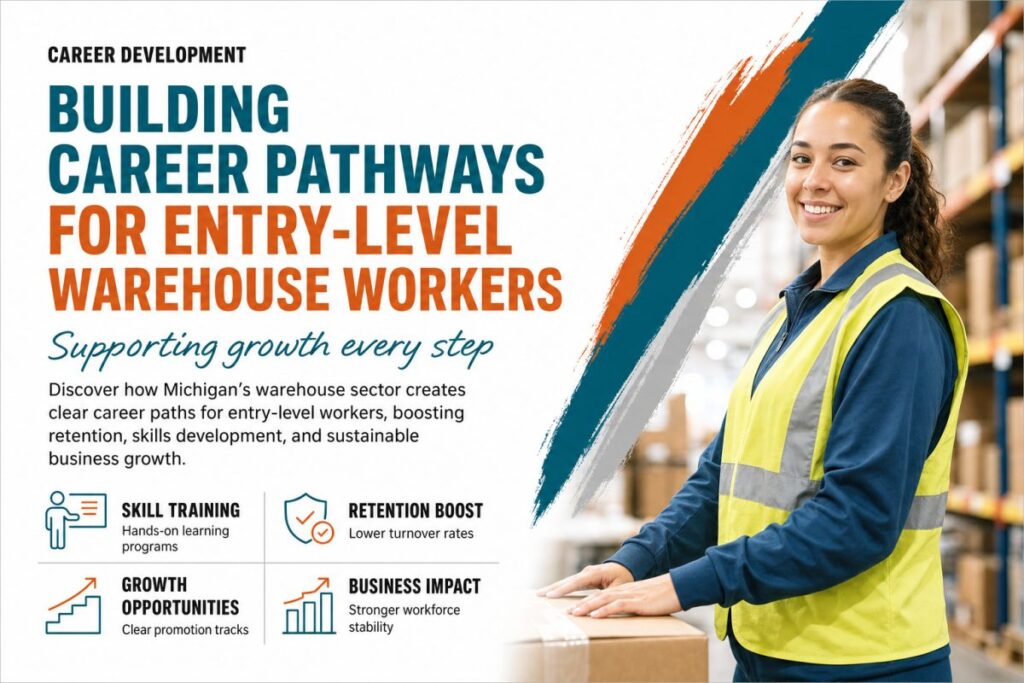
In Michigan’s competitive warehouse sector, developing career pathways for entry-level warehouse workers is essential for fostering employee retention, enhancing skills, and supporting long-term business growth. As warehouse employers face increasing demand and workforce challenges, investing in structured career development not only benefits workers but also strengthens operational stability. This article explores actionable strategies for creating meaningful career opportunities for entry-level employees in Michigan’s warehouse industry, ensuring a skilled and motivated workforce that can adapt to evolving market needs.
Understanding the Importance of Career Pathways in Warehousing
Career pathways provide clear, structured routes for employees to progress within an organization, offering both motivation and direction. For entry-level warehouse workers, these pathways transform temporary or routine jobs into promising careers with growth potential. Michigan’s warehouse sector, critical to the Midwest’s supply chain, depends heavily on these workers to keep operations running smoothly. By defining career pathways, employers can reduce turnover, improve job satisfaction, and enhance workforce skills.
Challenges Faced by Entry-Level Warehouse Workers
Entry-level roles in warehouses often involve repetitive tasks, physical demands, and limited immediate incentives for advancement. Many workers feel stuck without clear guidance or opportunities to develop new skills. This can lead to high turnover rates and difficulty attracting qualified candidates. Creating career pathways addresses these issues by showing employees a future within the company and a plan to achieve it.
Benefits to Employers and Employees
Employers benefit from increased employee loyalty, improved productivity, and reduced recruitment costs. Employees gain confidence, skills, and a sense of purpose, which promotes long-term commitment. This mutually beneficial approach builds a resilient workforce aligned with business objectives.
Key Strategies to Develop Career Pathways for Entry-Level Warehouse Workers
Implementing effective career pathways requires deliberate planning and resources. Below are proven strategies that Michigan warehouse employers can adopt to foster employee growth and retention.
1. Define Clear Job Progression Ladders
Start by mapping out a transparent career ladder that outlines the steps from entry-level positions to advanced roles such as forklift operator, team lead, or warehouse supervisor. This ladder should include:
- Job titles and descriptions for each level
- Required skills and certifications
- Expected performance benchmarks
- Potential timelines for promotion
Communicating this ladder to employees helps them understand what is required for advancement and motivates them to develop relevant skills.
2. Invest in Training and Skill Development
Providing access to training programs is critical. Offer on-site workshops, online courses, or partnerships with local technical schools to teach skills such as inventory management, equipment operation, and safety compliance. Consider:
- Cross-training workers on different warehouse functions
- Certifications for operating machinery (e.g., forklifts)
- Soft skills training, including communication and teamwork
These opportunities enable workers to build their resumes and qualify for higher-level positions.
3. Implement Mentorship and Coaching Programs
Pair entry-level workers with experienced mentors who can provide guidance, share knowledge, and offer support. Mentorship programs foster a culture of learning and create personal connections that encourage workers to stay and grow with the company.
4. Recognize and Reward Progress
Regularly acknowledge employee achievements, whether through formal reviews, bonuses, or public recognition. Celebrating milestones reinforces the value of career progression and encourages continuous improvement.
Building a Supportive Environment for Career Growth
Beyond formal programs, cultivating a workplace culture that values employee development is crucial. A supportive environment encourages workers to engage with their career pathways fully.
Encourage Open Communication
Create channels where employees can discuss career goals, challenges, and feedback. This dialogue helps employers tailor development opportunities and address concerns before they lead to turnover.
Offer Flexible Staffing Solutions
Using staffing options like Long-Term Staffing or Contingent Staffing can help employers manage fluctuating workloads while providing consistent opportunities for entry-level workers to gain experience and prove their capabilities.
Promote Diversity and Inclusion
Ensure career pathways are accessible to all employees regardless of background. Inclusive practices foster innovation and broaden the talent pool within the warehouse workforce.
Case Study: Successful Career Pathway Implementation in a Michigan Warehouse
A mid-sized Michigan warehouse integrated a comprehensive career pathway program that included defined job ladders, regular training sessions, and a mentorship initiative. Within 12 months, turnover decreased by 30%, and internal promotions filled 60% of supervisory roles. Workers reported higher job satisfaction and clearer understanding of their career prospects.
This example illustrates how strategic investment in career pathways yields measurable benefits for both employees and employers.
Steps to Get Started with Career Pathways at Your Warehouse
- Assess Current Workforce Needs: Identify skill gaps and advancement opportunities.
- Design a Career Ladder: Collaborate with HR and operations to map roles and requirements.
- Develop Training Programs: Partner with local providers or create in-house training.
- Launch Mentorship Initiatives: Select mentors and train them to support mentees effectively.
- Communicate Pathways Clearly: Use meetings, handbooks, and digital platforms to share information.
- Monitor and Adjust: Collect feedback and performance data to refine the program.
By following these steps, Michigan warehouse employers can build robust career pathways that attract and retain entry-level workers.
Conclusion
Creating career pathways for entry-level warehouse workers is a strategic investment that drives workforce stability, operational excellence, and long-term growth in Michigan’s warehouse sector. By defining clear job progression, providing targeted training, fostering mentorship, and cultivating a supportive environment, employers can empower workers to build meaningful careers. This approach not only addresses turnover challenges but also enhances company reputation and productivity.
If you’re ready to develop tailored staffing solutions that support career growth and workforce success, contact Transnational Staffing today. Our expertise in Manufacturing Staffing and Long-Term Staffing can help you build a skilled, motivated warehouse team that thrives in the Midwest market.
Call us now at (734) 284-0785 or visit transnationalstaffing.com to learn more about how we can support your workforce goals.